
Jet Airways has entered into a special code sharing agreement with the world's largest carrier American Airlines for India-US flights.

Move comes in view of big debt overhang in two sectors; companies unwilling.
Move comes in view of big debt overhang in two sectors; companies unwilling.

In India, the aviation industry contributes five per cent of gross domestic product, around Rs 291 crore (Rs 2.91 billion) in tax contributions, provides four million jobs and another seven million jobs through tourism and related activities.

Airlines have hiked their fares substantially for Down Under.
Indian Airlines whipped Bangladesh XI while Air-India prevailed over CISF in the semi-finals of the Shastri hockey tournament.\n\n
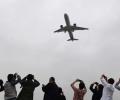
India witnessed the highest increase in airfares among the 10 top aviation markets in the Asia-Pacific and West Asia collectively across both domestic and international flights Q4 2019 and Q4 2022 in nominal terms, according to research by Hong Kong-based Airports Council International (ACI). India, where fares went up by 41 per cent, was followed by the UAE (34 per cent), Singapore (30 (per cent) and Australia (23 per cent). The study, which was undertaken in collaboration with Flare Aviation Consulting, examined around 36,000 routes in the top 10 aviation markets in Asia-Pacific and West Asia.

Domestic airlines may increase foreign flight frequencies

Boeing 737 MAX planes were globally grounded in March 2019, after two of these crashed within five months, raising safety concerns.
Domestic airlines are keen to bring China into their network as the latter is set to become the country's top trade partner in the coming years.
The move will help mop up not more than Rs 10 billion, which is only a fifth of the capital requirement of the industry, led by Jet Airways and Kingfisher Airlines, say experts. The expected investment has been calculated on the basis of a 100 per cent premium on the current valuations of Jet Airways and Kingfisher -- two of the country's largest carriers by market share -- which require over Rs 50 billion.
The airlines worldwide may collectively lose a whopping $9 billion in 2009, a key aviation body said in its forecast, nearly doubling its March estimate of $4.7 billion loss, spelling a rapidly deteriorating revenue environment for the industry.

So why did the airline industry blink and decide to beat it? Well, quite a few reasons for it actually. Read on. . .

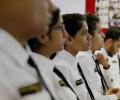
Air India on Monday announced a new compensation structure for its pilots and cabin crew, with a guaranteed flying allowance of 40 hours per month for both categories of staff. While the flying allowance has been doubled for pilots, it has been introduced for flight attendants as part of the new compensation structure. Pilots will earn an additional amount as a reward based on the number of years of service with the airline and get an allowance while undergoing training for command or conversion to another aircraft type.
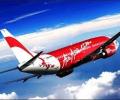
The Federation of Indian Airlines had challenged the aviation regulator's decision this week to issue an operating permit to AirAsia India.
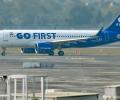
Indian airline Go First is considering legal action against Pratt and Whitney (PW) for failing to provide compensation after March 2020 for planes grounded due to engine supply delays, sources said on Thursday. About 90 per cent of the airline's fleet of aircraft uses PW engines. About 24 of the airline's 55 planes are grounded due to delays in engine supply by PW.
SpiceJet on Tuesday said shareholders have approved the transfer of its cargo and logistics services business to a subsidiary, on a slump sale basis, through an all-share deal worth over Rs 2,555 crore, a move that will help the airline to significantly reduce its negative networth. Besides, the shareholders have cleared the proposal to raise up to Rs 2,500 crore through the Qualified institutional placement (QIP) route. These developments also come at a time when the airline industry is slowly recovering after being battered by the coronavirus pandemic.
Kingfisher, Jet and state-owned Air owe Rs 4,000 crore to oil companies and airports. Dues to the Airports Authority of India, private airports and oil companies IOC, BPCL and HPCL were to have been cleared by March 31, under the government's mandate. Industry figures show that the three airlines are collectively projected to make operating losses of Rs 5,000 crore.
ATF for domestic carriers has become 11.22 per cent cheaper since October and is expected to see more price cuts in the next three months.

The year gone by has also forced all airlines to turn the lens sharply on their own costs, workings and internal dynamics, opening their eyes to their vulnerabilities. Fewer, leaner, nimbler players will emerge from the carnage.
India's domestic air travel market would be among the top five globally, experiencing the second highest growth rate in domestic passenger traffic after Kazakhstan but before China, IATA said.

Through a Freedom of Information Act request, the Show '20/20' obtained lists of recent health violation records from the FDA, the agency in charge of inspecting airlines and their outside food caterers.

rediffGURU Krishna Kumar offers expert advice on how you can polish your skills and perform better at work.

West Asian carriers are up against Air India and IndiGo in the battle for seats on lucrative international routes.
A volcano named 'Eyjafjallajoekull' has spread havoc across Europe hitting businesses across the world.

Executives of Indian airlines said that the drop is primarily for flights to major metro cities like Delhi, Mumbai, Hyderabad, Bangalore, which are the prime revenue generators on the domestic front.

Going 'long' is becoming an overcrowded trade on Dalal Street, and any negative trigger could lead to a sharp correction, warn experts. However, given the strong momentum, particularly in IT stocks, the downside could be protected in the immediate term. "With the Nifty50 surging to new life-time highs, the bulls remain in control. Further upsides are likely once the immediate resistance of 21,492 is taken out.
"No airline is making money in India because they are selling below cost. The country is seeing a 25 per cent annual growth rate in air passenger traffic, but some slowdown is also expected. These are some of the pains when markets open up," said John Leahy, chief operating officer (customers), Airbus. Leahy, however, declined to offer details.
Jet already has $300 mn of ECB.

Like Air India, there have been recent cyber attacks on some major airlines, including one in Canada, and a global airlines alliance

The Indian Commercial Pilots Association (ICPA), the non-executive pilots' body of erstwhile Indian Airlines, on Wednesday said that it will not accept any pay cut proposed by the management.
In an online chat with readers, Rony Kurien, Chief Operating Officer, Ecole Hoteliere Lavasa answered queries on career opportunities in the hospitality sector.
The complaint was lodged by Mumbai-based Express Industry Council of India, which represented major express courier and cargo companies such as DTDC, Aramex India, Blue Dart, DHL Express, GATI and First Flight.

Corporate margins and profits in India remain vulnerable to changes in crude oil prices in the international market. Historical quarterly data from listed companies (excluding banks, finance and insurance, oil and gas, and power sectors) indicate an adverse correlation between corporate margins and crude oil prices.
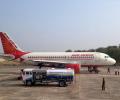
Air India has been a subject of its passengers' ire this week as more than half of its flights have been delayed, primarily because of an old crew rostering system. Due to the existing system, the airline has not been able to handle the disruption created by cyclone 'Biparjoy' on India's western coast. The sudden grounding of two planes also added to the carrier's woes.
Aviation watchdog DGCA has issued a circular to airlines and the Airports Authority of India (AAI) on measures to deal with threats from jamming and spoofing of the Global Navigation Satellite System (GNSS) amid reports of such interference in the Middle East.
Air India will require more than 6,500 pilots to operate 470 aircraft that are to be supplied by Airbus and Boeing in the coming years, according to industry sources. Seeking to expand fleet as well as operations, the airline has placed orders for acquiring a total of 840 aircraft that includes an option to buy 370 planes. This is one of the largest aircraft order by any airline. Currently, Air India has around 1,600 pilots to operate its 113 aircraft fleet and in recent times, there have been instances of ultra-long haul flights getting cancelled or delayed due to shortage of crew.

With the FIPB giving approval to the Tata-Singapore Airlines joint venture to start a full-service carrier, Tata Group Chairman Emeritus Ratan Tata on Friday met Commerce and Industry Minister Anand Sharma.
Goa's second airport began operations last week and if all goes according to plans, the state will be the base for a new regional airline, Fly91. Promoted by the ex-executive vice-president of now grounded Kingfisher Airlines, Manoj Chacko, and Fairfax India's former head, Harsha Raghavan, the airline will offer no-frills buy on board product and serve unconnected routes with two ATR 72 aircraft. An application for the initial no-objection clearance was filed with the civil aviation ministry last week.
